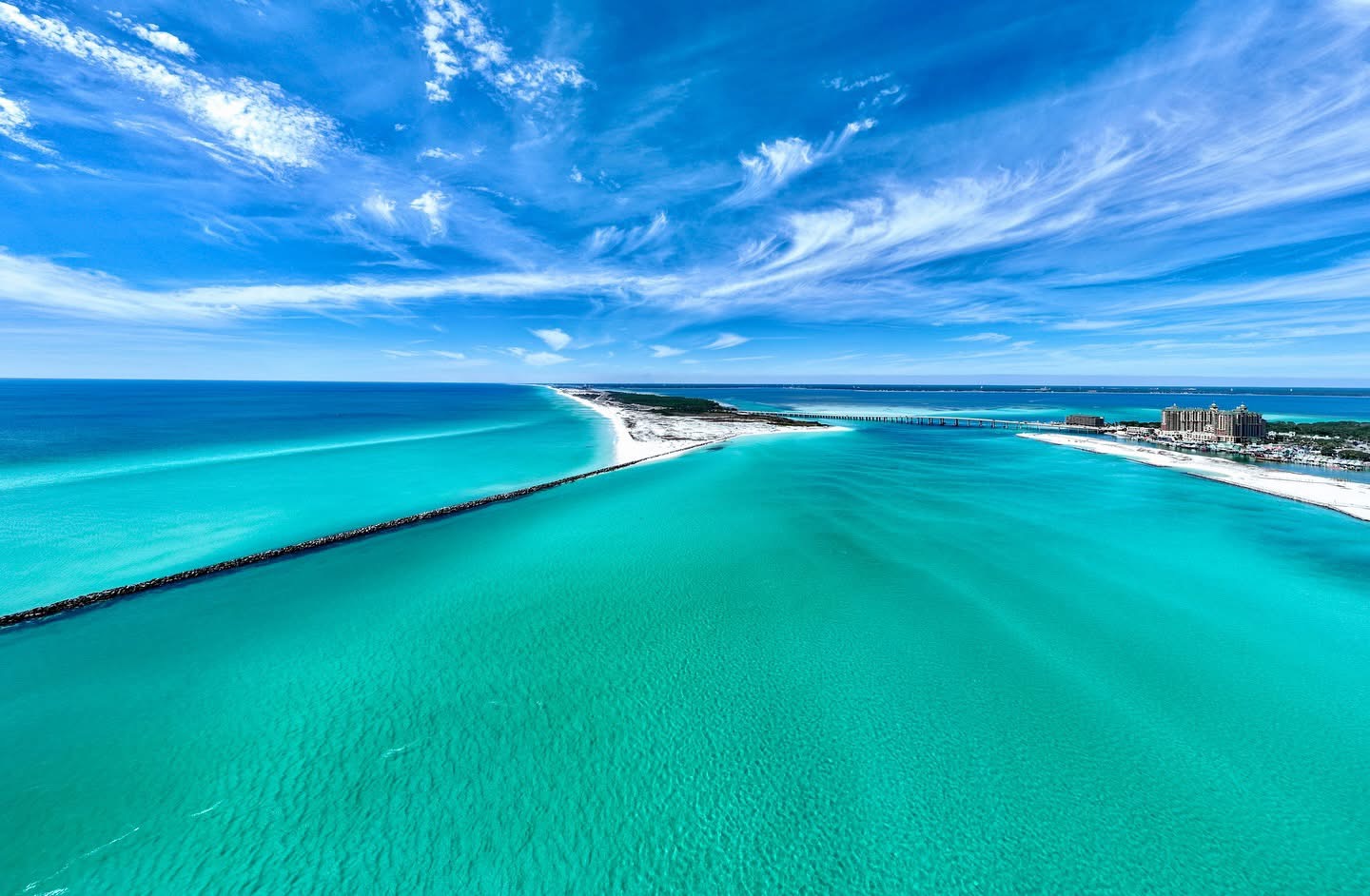
Quick Answer: Yes, in some situations a future structure, renovation, vegetation change, or neighboring development could alter a 30A Gulf view. A beautiful view today is not automatically a legally protected view tomorrow. Before paying a premium for a Gulf view, Karen Holder recommends verifying who owns the land in front of the property, what the survey shows, whether recorded easements exist, how the property is zoned, what can legally be built on nearby parcels, whether architectural or community restrictions apply, and whether any open space or preserve area is actually protected. For Gulf-front and near-Gulf property, Florida coastal construction rules can add another layer of review. The key question is not simply “Do I have a view?” but “What protects that view?”
Key Takeaways
- A Gulf view is not automatically a protected Gulf view.
- Vacant land in front of a property should never be assumed to remain vacant.
- A survey can help identify property lines, easements, encroachments, access areas, and the relationship between the home and surrounding parcels.
- Zoning and development rights matter when evaluating what may be built nearby.
- HOA or architectural restrictions may limit height, massing, materials, or location of future structures, but those restrictions should be verified in the current governing documents.
- Preserve or common-area language should be confirmed rather than assumed from a listing description.
- Recorded easements may affect access, utilities, beach use, driveways, or other property rights.
- Vegetation itself can change or obstruct a view over time.
- For property near the Gulf, Florida's Coastal Construction Control Line can affect permitting and development review.
- The CCCL is not simply a fixed setback line; it identifies an area where special state siting and design rules apply.
- If a buyer is paying a major premium for a view, the legal and practical durability of that view should be part of the purchase analysis.
- Future resale can be affected if the view changes, so this should be considered before closing.
One of the things buyers tell me all the time is:
“Karen, we love this house because of the view.”
And I understand that completely.
A Gulf view can change the entire experience of owning on 30A.
You wake up and see blue water.
You sit on the porch and watch the sunset.
You may be willing to pay significantly more because of it.
But that is exactly when I want to ask a harder question:
“What protects that view?”
Because a beautiful view today and a protected view tomorrow are not the same thing.
Karen’s Tip: I never want a buyer paying a premium for a view they simply assume is permanent. If the view is part of why we are paying the price, I want to understand exactly what stands between that home and the Gulf.
First: Who Owns the Land in Front of You?
This is where I start.
If there is land between the house and the Gulf, I want to know who owns it.
Is it:
- A private residential lot?
- A condominium common area?
- An HOA-owned parcel?
- A conservation area?
- A public right-of-way?
- A dune parcel?
- A beach-access corridor?
- A vacant buildable lot?
Those are completely different situations.
A buyer can look out a window and see nothing but trees or open sand.
That does not tell me whether someone has the legal right to build there.
Vacant Land Is Not Empty Information
This is one of my biggest buyer rules.
If I see an empty lot next door or in front of the property, I do not call that:
“Open space.”
Not yet.
I want to know:
- Who owns it?
- How is it zoned?
- What uses are permitted?
- What is the allowable building height?
- What are the setbacks?
- Can it be subdivided?
- Does an HOA or design code restrict development?
- Are there recorded easements?
- Is any portion protected?
Until I understand that, it is simply vacant land.
Vacant today does not mean vacant tomorrow.
What Most Buyers Miss: A View and a Protected View Are Not the Same Thing
This is the distinction I think matters most.
A view may exist because:
- The neighboring lot has never been built
- The current home next door is only one story
- Vegetation happens to be low
- An older structure is smaller than what current rules may allow
- A community has not reached full buildout
That is very different from a view protected by:
- Recorded easement
- Protected conservation land
- HOA-owned common space
- Permanent setback conditions
- Development restrictions
- Other legally enforceable limitations
If the premium is tied to the view, I want to know which category we are in.
Start With the Survey
A current survey is one of the most useful documents in a coastal purchase.
I want buyers understanding:
- Actual property lines
- Building footprint
- Driveway location
- Pool location
- Fences
- Recorded easements
- Rights-of-way
- Encroachments
- Beach-access corridors
- Utility areas
What appears to belong to the property during a showing may not line up exactly with the legal boundary.
That is particularly important in older neighborhoods where improvements may have changed over many years.
Property Lines Are Not Always Where Buyers Think They Are
Landscaping can be deceiving.
A fence can be deceiving.
A driveway can be deceiving.
A row of shrubs can be deceiving.
I do not assume any of them define the legal boundary.
For example, I want to know:
- Does the pool sit entirely within the parcel?
- Does a neighboring fence encroach?
- Does the driveway cross an easement?
- Does the owner use land that actually belongs to someone else?
These questions may have nothing to do with how attractive the house is.
They can have everything to do with how comfortable I am recommending the purchase.
Easements Matter More Than Buyers Think
The word “easement” sounds technical.
But the practical impact can be very simple.
An easement can affect who has the right to use part of the property and for what purpose.
Depending on the property, that might involve:
- Beach access
- Driveway access
- Utilities
- Drainage
- Pedestrian access
- Shared roads
- Maintenance access
I want to know where those easements are and how they affect the way the buyer will actually use the property.
Beach Access and View Rights Are Different Questions
This is another place buyers can get confused.
A property may have:
A Gulf view.
That does not automatically mean:
Beach access.
A property may have:
Deeded beach access.
That does not automatically mean:
A permanently protected view.
I want to verify both separately.
For access, I may want to understand:
- Is it deeded?
- Is it HOA-controlled?
- Is it through a recorded easement?
- Is it shared?
- Who maintains it?
- Who can use it?
For the view, I want to understand what legally and physically sits between the property and the Gulf.
Can the Neighbor Build Taller?
This is one of the most important practical questions.
Maybe the neighboring home is one story today.
That does not necessarily mean it must remain one story.
I want to understand:
- Current zoning
- Applicable height limits
- Setbacks
- Lot coverage
- Architectural guidelines
- Whether an addition or replacement home could be larger
If the view currently exists over another home, I want to know whether that structure could legally change.
Community Architectural Rules Can Help Protect a View — But Never Assume
Many 30A communities have detailed architectural standards.
Those standards may control:
- Height
- Setbacks
- Roof form
- Massing
- Exterior modifications
- Lot coverage
- Landscaping
That can help preserve a community's character.
But I do not want a buyer assuming those rules protect a particular view unless we have actually reviewed them.
A design code protects the community according to its rules.
It does not necessarily promise your specific view will remain unchanged.
Preserve Views Need Verification Too
I love preserve-facing property.
Privacy.
Trees.
Open space.
No house immediately behind you.
But I want to know what “preserve” really means.
Is the land:
- Legally protected conservation land?
- Owned by the HOA?
- Owned by a developer?
- A wetland?
- Part of a future phase?
- Simply vacant today?
That distinction matters enormously.
Karen’s Observation: “Preserve view” is one of those phrases I never want a buyer accepting from the listing alone. I want to know who owns the land and what actually protects it.
Vegetation Can Change a View Too
Not every view issue involves another building.
Trees grow.
Palms grow.
Native vegetation changes.
Landscape rules may prevent trimming or removal.
Dune vegetation can be protected.
That means a view corridor may change even when no new home is built.
If a buyer is paying for a narrow view corridor, I want to understand what vegetation could affect it later.
Gulf-Front and Near-Gulf Property Adds Another Layer: Florida’s CCCL
For property close to the Gulf, Florida's Coastal Construction Control Line may become relevant.
The Florida Department of Environmental Protection describes the CCCL as the landward limit of a special state permitting jurisdiction for sandy-beach areas affected by severe coastal storm conditions.
Construction and excavation seaward of the line generally require special review or permitting unless an exemption applies.
That can affect:
- New homes
- Additions
- Pools
- Decks
- Walkovers
- Other construction activity
This is especially important for buyers considering redevelopment.
The CCCL Is Not Simply a Building Setback
This is an important distinction.
The Coastal Construction Control Line is not simply a line saying:
“Nothing can be built seaward of here.”
Florida DEP specifically explains that it is a jurisdictional line where special siting and design considerations apply.
That means the development analysis can be more complicated than looking at one setback number.
If redevelopment matters to the purchase, I want qualified professionals reviewing:
- Survey
- CCCL location
- Current permitting rules
- Building envelope
- Dune conditions
- Local zoning
- Community architectural requirements
before we assign value to what we think can be built.
Do Not Assume an Existing House Proves What You Can Build Today
This comes up often with older coastal homes.
A buyer may see an older house very close to the Gulf and say:
“Great. We can tear it down and build another one right there.”
Not necessarily.
The existing home may have been built under:
- Older zoning
- Different setbacks
- Different coastal rules
- Prior approvals
- Legal nonconforming conditions
Replacement or redevelopment can require a completely new analysis.
The current footprint is information.
It is not always a guarantee of future buildability.
Buying Next to Vacant Land Requires a Different Kind of Due Diligence
If the property next door is vacant, I want to know what that lot could become.
Could it become:
- A large single-family home?
- A multi-level home?
- A pool?
- A driveway?
- A commercial use?
- A multifamily property?
- Another phase of development?
The answer depends on the specific zoning, community, parcel, and applicable rules.
I do not want a buyer imagining today's empty lot as permanent privacy.
Future Construction Can Change More Than the View
A neighboring project may affect:
- Privacy
- Noise
- Traffic
- Sunlight
- Pool exposure
- Parking
- Rental desirability
- Future resale
That is why the question is not only:
“Will it block the Gulf?”
It is:
“How could future development change the entire ownership experience?”
Views Should Be Evaluated From Every Important Room
This is another thing I like to do during a showing.
I do not just stand on the top balcony.
I want to know:
- What does the primary bedroom see?
- What does the kitchen see?
- What does the main living room see?
- What does the pool area see?
- What happens when I sit down instead of stand?
A view marketed beautifully from one upper deck may not have much impact on everyday living.
If you are paying for it, I want it to matter where you actually spend time.
Partial Gulf View, Gulf View and Unobstructed Gulf View Are Not the Same
Marketing language matters.
A property may be described as:
- Gulf view
- Partial Gulf view
- Panoramic Gulf view
- Unobstructed Gulf view
- Forever view
I want buyers taking those phrases as a starting point.
Not proof.
I want to stand there.
Then investigate what exists between the property and the water.
How Much of the Purchase Price Is the View?
This is where the financial analysis becomes important.
Imagine two similar homes.
One is $3.5 million.
The other is $4 million because of the Gulf view.
If the buyer is paying an additional $500,000 largely because of the view, I want to know how durable that advantage is.
Because if the view changes later, the ownership experience changes.
And the resale story may change too.
The larger the view premium, the more important the view due diligence becomes.
View Protection Matters to Resale
I think about resale before my buyer closes.
If we need to sell this home in three years, what will I tell the next buyer?
If I can say:
“That open space is protected.”
that is one story.
If I have to say:
“There is currently nothing built there.”
that is a very different story.
I want the buyer understanding that distinction today.
Rental Buyers Need to Think About the View Too
A Gulf view can have significant rental appeal.
Guests search for it.
Photographs sell it.
Balconies overlooking the Gulf can materially change the rental experience.
That makes future view risk important to an investor as well.
If rental projections rely partly on:
“Beautiful unobstructed Gulf views,”
I want to understand how secure those views actually are.
Karen’s Investor Perspective
I never want a rental investor assuming today's premium rental rate will remain unchanged if the physical experience of the property changes.
If a future home blocks a meaningful portion of the view, that may affect:
- Photography
- Guest perception
- Rental rate
- Occupancy
- Resale appeal
There are no guarantees.
But understanding development risk before purchase is much better than discovering it afterward.
What I Want Before My Buyer Gets Comfortable
Depending on the property, I may want to see:
- Current survey
- Title information
- Recorded easements
- Plat
- HOA documents
- Architectural guidelines
- Zoning information
- Future development plans
- Neighboring parcel ownership
- Applicable height and setback rules
- CCCL information for near-Gulf property
- Conservation or preserve documentation where relevant
I am not trying to make a beautiful home feel complicated.
I am trying to make sure the buyer understands what they are paying for.
Karen’s 30A View Protection Test
- Why are we paying a premium for this property?
- How important is the Gulf view to that premium?
- Who owns every parcel between the home and the Gulf?
- Is any of that property vacant?
- What is it zoned for?
- What can legally be built there?
- How high could a future structure potentially be?
- What setbacks apply?
- Does an HOA or design code add additional restrictions?
- Does the survey show easements or access corridors?
- Is open space actually protected?
- Could vegetation materially affect the view?
- Is the property affected by the Coastal Construction Control Line?
- If redevelopment matters, have appropriate professionals reviewed the building possibilities?
- If the view changed, would we still love the property?
- If the view changed, would another buyer still understand the value?
What Most Buyers Miss
Buyers tend to investigate the home they are buying.
I also want to investigate what surrounds it.
Because the house can be perfect.
Perfect kitchen.
Perfect floor plan.
Perfect pool.
Perfect furnishings.
But if the reason you paid a major premium was the open Gulf view, the property in front of you becomes part of your buying decision too.
You are not buying the neighboring land.
But what can happen on that neighboring land may still affect what you are buying.
My Advice After More Than 20 Years in Real Estate
I love a Gulf view.
I understand why people pay for one.
I would too.
But I do not want emotion replacing due diligence.
If you tell me:
“Karen, this is the one because of that view,”
I am going to look out the same window.
Then I am going to start asking questions.
Whose land is that?
Is it buildable?
How tall can someone build?
What do the setbacks look like?
What does the survey show?
Is there an easement?
Is that actually preserve?
Is the open area owned by the HOA?
Could a neighboring house be replaced with something larger?
Could trees eventually grow into the view?
And if we are close to the Gulf, what does the coastal construction environment look like?
Then I want to know something very simple:
If the view changed, would you still be happy owning this house?
If the answer is yes, wonderful.
If the answer is:
“No. The view is why we're paying this much,”
then I want us doing even more work before closing.
Because I never want a buyer saying to me three years later:
“I thought nobody could ever build there.”
I would rather ask that question today.
That is what good coastal due diligence is supposed to do.
Protect the reasons you wanted the property in the first place.
Continue Your 30A Research
- Private Beach Access on 30A: What Buyers Need to Know
- 30A Gulf Front vs. Gulf View Real Estate
- 30A Gulf-Front Luxury Real Estate Guide
- What Makes a 30A Property Hold Its Value?
- How to Evaluate Luxury Real Estate on 30A
- 30A Buyer Guide
- 30A Market Report
- Search 30A Real Estate with Karen Holder
Karen Holder
Luxury Real Estate Advisor | Scenic Highway 30A
After more than 20 years in real estate, I help buyers understand the property-level details that can materially affect ownership along Scenic Highway 30A, including surveys, property lines, easements, beach access, neighboring development, Gulf views, construction, insurance, maintenance, and future resale.
My goal is not simply to help a buyer find a beautiful view. I want to understand what creates that view, what may change it, and whether the premium attached to it is supported by something durable enough to matter to the next buyer too.
Important Note: Views are never guaranteed unless supported by specific enforceable rights or restrictions, and even then buyers should obtain appropriate legal advice regarding the scope and enforceability of those rights. Zoning, setbacks, building height, easements, association restrictions, development plans, coastal regulations, vegetation protections, and construction rights can change or vary by parcel. Florida's Coastal Construction Control Line is a state regulatory jurisdiction and is not simply a general building setback. Buyers should independently verify surveys, title matters, zoning, neighboring parcel rights, association documents, CCCL status, permits, development plans, and all property-specific matters with qualified surveyors, attorneys, engineers, architects, governmental agencies, and other appropriate professionals. This article provides general real estate information and is not legal, surveying, engineering, architectural, environmental, construction, tax, financial, or investment advice.
Phone: (850) 687-1064
Email: Kmholder30a@gmail.com
Website: 30APropertySearch.com